OCPP 1.6 & 2.0.1 in production
Both versions run in production – including smart charging, firmware updates and security profiles. OCPP 2.1 is already prepared.

NeLeSo OCPP Server
A production WebSocket backend for developing, testing and operating your charging infrastructure – ready on day one instead of 12 to 18 months of in-house development. With test access, simulators, a developer portal and open APIs for your team.
The OCPP Server is one of our software building blocks: proven in the field – and the foundation for custom solutions we develop with you and test against real hardware.
Illustrative capture of an OCPP session: the charge point boots (BootNotification), becomes available, starts a charging transaction with meter values – and load management adjusts the power in real time.
Who is it for?
For wallbox manufacturers
Development, testing and certification preparation against a production OCPP backend – plus field diagnostics once your devices are out at customer sites.
For platform teams
Open APIs, webhooks and clean data models: you build your product, the server handles protocol, sessions and meter values.
Protocol depth
Whatever appears on our standards list runs in production – or is clearly marked as prepared.
Both versions run in production – including smart charging, firmware updates and security profiles. OCPP 2.1 is already prepared.
Certificate-based charging without a card or app – with a native Hubject connection for contract certificates and certificate handling in the backend.
Locations, tariffs, sessions and CDRs for roaming partners – on both the CPO and EMP side, including a test environment for partner onboarding.
Developer experience
Everything your team needs for the integration is documented, simulatable and reachable via API – from the first request to production operations.
Complete OpenAPI specification, sample requests and sandbox access – onboarding in hours, not weeks.
Virtual OCPP 1.6 and 2.0.1 charge points for development and CI: boots, sessions and fault patterns – reproducible by click or API.
Test roaming scenarios before the partner is connected: locations, sessions and CDRs from simulated EMP systems.
Clean data models for charge points, sessions and meter values – events arrive in your system via webhook, right where you need them.
Controlled tooling for AI-assisted operations: query status, pull diagnostics and review configuration – with clearly scoped access to operational data.
24/7 monitoring and proven production operations with operators in the field – for us, scaling is routine, not a project.
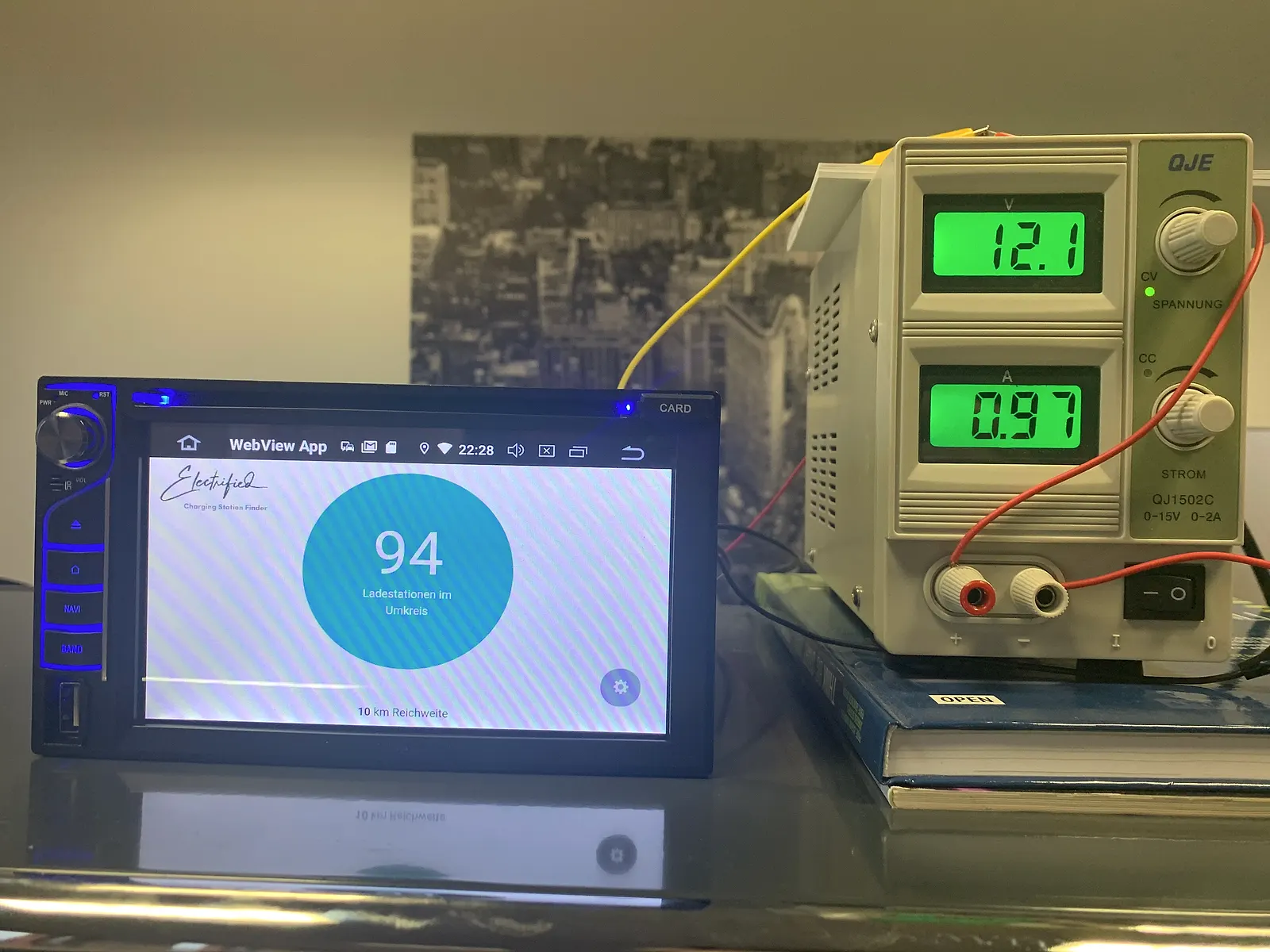
NeLeSo Test Lab · since 2014
Proof through testing
Since 2014 we have been running a test lab with wallboxes, vehicles and metering points. It has produced more than 250 practical test cases that manufacturers use to validate firmware and configuration – before a fault surfaces at a customer site.
Support tools for manufacturers and installers are available at wallbox-support.com.
FAQ
Yes. The server runs as SaaS, on-premises in your own infrastructure or as the core of our NeLeSo Edge appliances – always with the identical feature set. The source code is included, so you stay independent and can run internal audits end to end.
The charger simulator creates virtual OCPP 1.6 and OCPP 2.0.1 charge points for development and CI, while the OCPI/EMP simulator covers roaming scenarios. For real hardware, request test access and connect your wallbox straight to a dedicated WebSocket endpoint.
Yes. The server processes and stores OCMF-signed meter values, so charging sessions can be billed in compliance with German calibration law and verified by end customers through transparency software.
The OCPP Server is the backend core: it manages charge points, sessions and meter values and exposes APIs for your applications. The OCPP Broker is a decoupling layer in front of it that connects charge points to any backend – for example for zero-downtime migrations. The two products can be combined.
Next step